Transcriptomic Signature Related to Poor Welfare of Sport Horses

A 2023 study identifies blood‑based gene expression patterns linked to behavioral indicators of poor welfare in sport horses, including aggressiveness and stereotypies.
Researchers analyzed the blood transcriptome of 45 individually housed sport horses and found strong correlations between gene expression and behavioral signs of compromised welfare. Aggressiveness toward humans showed the strongest association with inflammatory pathways, while stereotypies also aligned with distinct gene expression profiles when combined with microbiota data. The study highlights potential biomarkers for identifying horses experiencing poor welfare and underscores the physiological impact of management practices.
Similar posts
%20copy.png)
Dr Andrew McLean to Receive the Professor Ingvar Fredricson Foundation Scholarship at the 2026 Horse Welfare Summit
Two days. One shared goal: advancing horse welfare through science, education and practice. Join leading international experts at the Horse Welfare Summit 2026, where Dr Andrew McLean will deliver two keynote lectures and receive the Professor Ingvar Fredricson Foundation Scholarship.

The Smartphone's Growing Role in Sport Horse Management
A new review examines how smartphones are becoming genuine tools for monitoring a horse's soundness, heart rate and recovery, and even for meeting international competition requirements. Among the systems it highlights is Sleip, co-founded by Dr. Elin Hernlund, one of the Foundation's own scholarship recipients, whose work builds on decades of Swedish equine biomechanics research going back to Professor Ingvar Fredricson himself.

2025 Scholarship Awarded to Three World-Leading Biomechanics Researchers
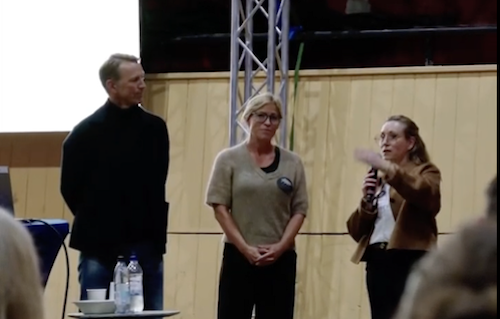
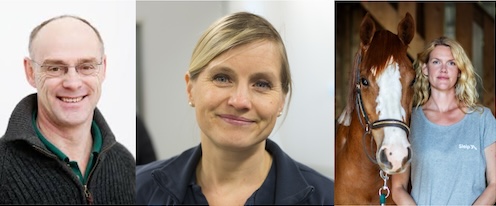
On November 2, visitors gathered in Hall B at the Jönköping Horse Show for the Professor Ingvar Fredricson Foundation’s 2025 scholarship ceremony, celebrating groundbreaking Swedish research in equine biomechanics. From the pioneering efforts of the 1970s—when high‑speed cameras and manual measurements were the researcher’s tools—to today’s AI‑powered motion analysis and robotic hoof simulators, the audience was taken on a journey through decades of innovation. Professors Lars Roepstorff and Marie Rhodin, together with Associate Professor Elin Hernlund, shared their latest breakthroughs, followed by live demonstrations showing how AI and high‑precision sensors are transforming the understanding of horse–rider interaction. Moderator Jens Fredricson guided the dialogue and inspired exchange between researchers, while post‑event discussions with attendees helped build valuable bridges between research and practice.