Recognizing Leaders in Equine Welfare
.jpg)


Andrew McLean
“By consistently bridging research and practice, Dr Andrew McLean demonstrates his deep and long-standing commitment to equine welfare.”
— The Fredricson Family
The Professor Ingvar Fredricson Foundation has decided to award its 2026 scholarship to
Dr Andrew McLean
Dr McLean is an internationally recognised pioneer in equitation science who, through his research, publications, and educational work, has reshaped our understanding of how horses learn, behave, and are trained. A skilled communicator, he makes complex science accessible and useful for riders, trainers, breeders, and decision-makers, translating research into practical tools that enhance both welfare and performance. His work spans several areas highlighted by the Foundation, including equine behaviour, learning and welfare, training and horsemanship, and the integration of research with well-established experience directly relevant to the equine sector.
Through his leadership in the International Society for Equitation Science (ISES) and close collaboration with international organisations such as the FEI, Dr McLean has significantly influenced the development of global guidelines for equine welfare and education.
Dr McLean is a worthy recipient of the scholarship, fulfilling the criteria of the Foundation’s mission to ensure that well-established experience and current research gain greater practical relevance for equine welfare, sustainability and performance. His work and educational approach are critical to the future of equine welfare and to how we train and educate horses in a sustainable and ethical way.
The scholarship will be awarded September 16th during the Horse Welfare Summit 2026 at Flyinge, where Dr McLean will also give a lecture. The Horse Welfare Summit 2026 is organised by Sweden’s National Equestrian Centres Flyinge & Strömsholm, centres of excellence in research, education, and development within the equine sector.
Dr. Andrew McLean
Lars Roepstorff, Marie Rhodin & Elin Hernlund
“Biomechanical research is crucial to improving horse welfare”
says Professor of Veterinary Medicine Dr. Ingvar Fredricson. Through world-leading research in combination with modern technology and applied methodological developments to detect, diagnose, and prevent lameness with unparalleled precision
The Professor Ingvar Fredricson Foundation has decided to award its 2025 scholarship to:
Lars Roepstorff, DVM, PhD: Professor of Anatomy and Physiology, Department of Animal Biosciences, Swedish University of Agricultural Sciences
Marie Rhodin, DVM, PhD: Professor of Anatomy, Department of Animal Biosciences, Swedish University of Agricultural Sciences, Diplomate of both the American and European Colleges of Veterinary Sports Medicine and Rehabilitation
Elin Hernlund, DVM, PhD: Associate Professor of Functional and Applied Anatomy of the Equine Locomotor Apparatus, Swedish University of Agricultural Sciences, Diplomate of the European College of Sports Medicine and Rehabilitation
The scholarship honors their joint contributions to equine health, performance, and well-being, and it celebrates their role in carrying forward the legacy of Professor Ingvar Fredricson, the pioneer of Swedish biomechanical horse research.
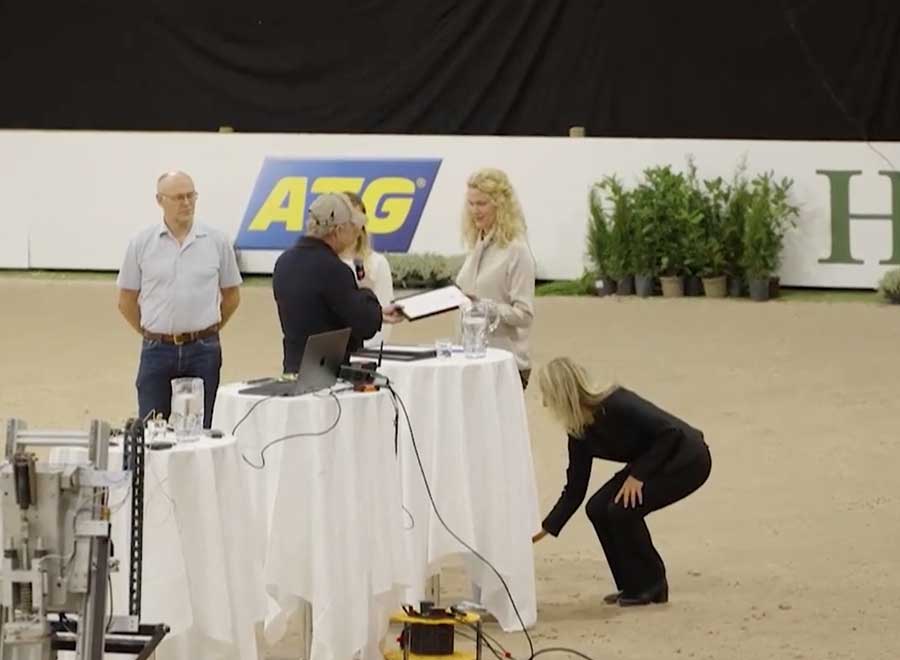
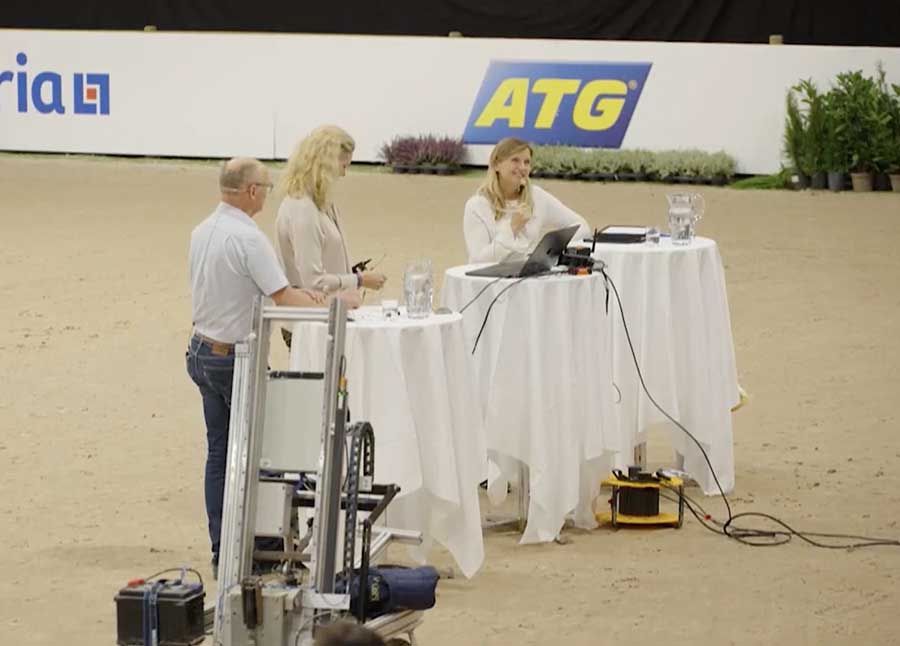
The scholarship will be presented on Sunday, November 2, 2025, at 11:15 a.m. in Hall B during the Jönköping Horse Show. Afterwards, the Foundation invites guests to a free, open clinic with live demonstrations by Professors Roepstorff and Rhodin and Associate Professor Hernlund, concluding at 12:15 p.m. Free seating in the stands is available throughout the event. Participants are warmly welcome to meet the researchers afterward.
“Biomechanical research is essential for improving horse welfare. Nearly fifty years after I first began exploring how motion analysis could help prevent and diagnose lameness, it is deeply satisfying to see how those early ideas have grown into a field that is transforming the way we care for horses. I realized early on that the human eye is too slow to detect the subtle signs of incipient lameness. The knowledge and technical tools we needed simply didn’t exist, so we had to think differently. We rented high-speed cameras and adapted technology from the aerospace industry, which made it possible to collect and analyze precise, high-resolution images of the horse’s movement patterns. This marked the start of modern biomechanical research in Sweden.
Today technology has taken a quantum leap forward. Lars, Elin, and Marie are at the forefront, developing a broad range of advanced biomechanical techniques — from AI-based diagnostics and 3D motion analysis to surface measurements using mechanical hooves and wearable systems — to detect, diagnose, and prevent lameness with unmatched precision. Their work improves equine care globally and shows how far the original vision has come, thanks to their scientific excellence, dedication, and innovation.”
— Professor Ingvar Fredricson, DVM, PhD
Eva Skiöldebrand
The Professor Ingvar Fredricson Foundation has decided to award its scholarship for 2023 to:
Eva Skiöldebrand, DVM, PhD
Professor in General Pathology at the Swedish Agricultural University (SLU)
For her groundbreaking research on biomarkers, which, among other things, makes it practically possible to assess the inflammatory response of training and different surfaces and its effects on the joint.
The scholarship will be presented in Helsingborg Regional Animal Hospital´s large lecture hall on May 28, 2024.
After the award ceremony, the Foundation will host a seminar with P.R. (René) van Weeren, DVM, PhD, Dipl. ECVS, Professor at Utrecht University, and Eva Skiöldebrand, DVM, PhD, Professor at SLU, on the topic:
EFFECTS OF PHYSICAL ACTIVITY OF FOALS AND YEARLINGS ON THEIR SOUNDNESS AS ADULTS
René van Weeren is an equine surgeon who has exclusively worked in research for many years. Biomechanics research is his specialty. He has, among other things, studied the influence of exercise in young horses and the development of articular cartilage in the lower extremity joints. René collaborates with veterinary and human medicine researchers from around the world.
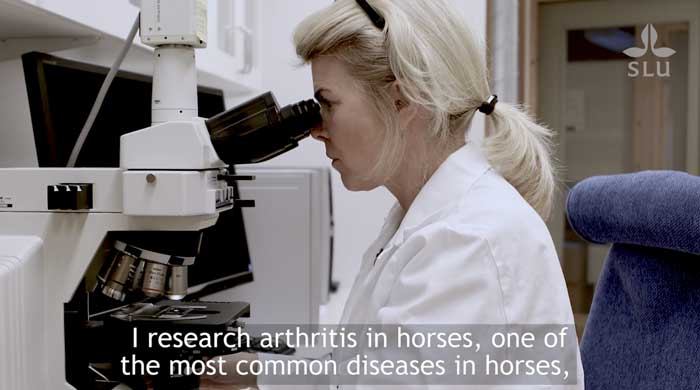
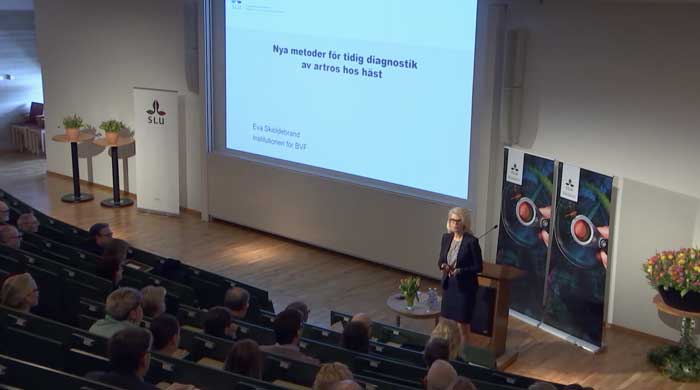
Eva Skiöldebrand’s primary research area is the most common disease in horses, osteoarthritis (OA). Her biomarker research may have decisive importance for early diagnostics and drug development. OA is also highly prevalent in humans and has great similarities to OA in horses. Eva collaborates internationally with researchers in both veterinary and human medicine.
Eva Skiöldebrand
Related Work