At Flyinge’s Horse Welfare Summit, the Professor Ingvar Fredricson Foundation awarded its 2026 scholarship to Dr Andrew McLean, recognising his pioneering work in equitation science and his longstanding contribution to equine welfare.
More than 2,400 years ago, Xenophon wrote that horses must be treated andtrained with intuition and kindness, because anything forced and misunderstoodcan never be beautiful. That idea still resonates with the Professor IngvarFredricson Foundation today, where understanding the horse through knowledge,experience and science is fundamental to good horsemanship. It is also aprinciple that runs through the work of this year's scholarship recipient, DrAndrew McLean. His pioneering work in equitation science and longstandingcontribution to equine welfare were recognised when the scholarship waspresented at Flyinge during the Horse Welfare Summit.
The ceremony opened with a film featuring Professor Ingvar Fredricson.
"Dear horse friends," he said, "it is truly inspiring at myadvanced age to meet all of you and share a little about the fact that I wasborn with a passion for horses, and how that came to influence not only myfuture, but also the future of many horses, researchers andveterinarians."
His son and Foundation board member Peder Fredricson continued the message."My father has always believed in something fundamental," he said,"that knowledge about horses needs to be shared and put into practice, sowe understand them better and improve their welfare."
That same conviction lies at the heart of Dr Andrew McLean's work.
For decades, Dr McLean has worked to bring scientific understanding ofequine behaviour, learning and training into everyday horsemanship, makingresearch-based knowledge accessible to riders, trainers and professionalsaround the world. Through his work with organisations such as the FEI, he hashelped shape international welfare standards.
It was particularly fitting to present the scholarship at Flyinge, a placeof deep significance to the Fredricson family. Ingvar Fredricson served asFlyinge’s Director and head stud veterinarian for fifteen years, and his sonJens continues to contribute to the development of the institution today.
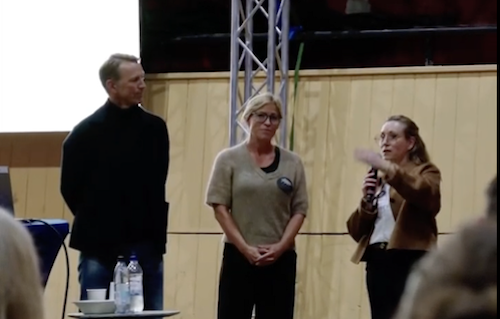
Foundation chair Kajsa von Geijer, along with board members Peder Fredricsonand Anna Fredricson, then took the stage. Ingvar's granddaughter Majken wasamong those attending, together with Foundation board representatives EvaSkiöldebrand and Annikka Berridge. Kajsa thanked Flyinge for hosting theceremony, then returned to Xenophon and recited a passage attributed to Simon:a ballet dancer trained by whips and spikes would move no more beautifully thana horse trained under the same conditions. Grace, in either case, cannot beforced into being.
Dr McLean could not attend, having been recently injured, so Kajsa welcomedMalin Axel-Nilsson, who works closely with him, to accept the scholarship inhis place.
"How is he doing?" Peder asked.
Malin answered that he was in Düsseldorf with his son, improving every day.
She explained that Andrew’s approach is grounded in learning theory:understanding how horses learn, how they acquire meaning from what we ask, andhow we can train them in ways that serve them best. She noted thatrepresentatives of the International Society for Equitation Science werepresent and encouraged the audience to speak with them to explore learningtheory further and understand the scientific foundations of Andrew’s work.
Anna Fredricson then presented the diploma and read the words inscribed onit:
"By consistently bridging research and practice, Dr Andrew McLeandemonstrates his deep and longstanding commitment to horse welfare."
Peder presented the scholarship statuette, a crystal piece featuring ahorse's head based on a clay sculpture he created himself. Kajsa closed theceremony by thanking Flyinge and once again and reaffirming the Foundation'scommitment to supporting passionate researchers, like those who had presentedtheir work throughout the Summit, and to encouraging the continued translationof scientific knowledge into everyday practice for the welfare of horses.
"We look forward to the continued impact of Dr McLean's work, helpingshape a better future for horses and those who work with them."
The Foundation extends its warmest congratulations to Dr McLean and wisheshim a full and swift recovery.


%20copy.png)