2025 Scholarship Awarded to Three World-Leading Biomechanics Researchers
October 10, 2024
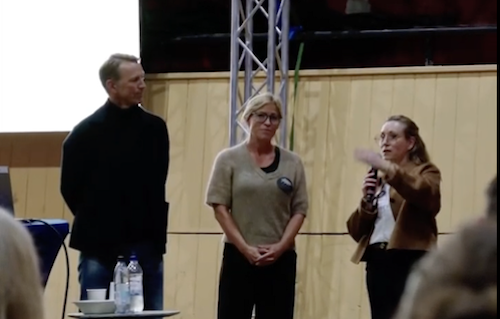
On November 2, visitors gathered in Hall B at the Jönköping Horse Show for the Professor Ingvar Fredricson Foundation’s 2025 scholarship ceremony, celebrating groundbreaking Swedish research in equine biomechanics. From the pioneering efforts of the 1970s—when high‑speed cameras and manual measurements were the researcher’s tools—to today’s AI‑powered motion analysis and robotic hoof simulators, the audience was taken on a journey through decades of innovation. Professors Lars Roepstorff and Marie Rhodin, together with Associate Professor Elin Hernlund, shared their latest breakthroughs, followed by live demonstrations showing how AI and high‑precision sensors are transforming the understanding of horse–rider interaction. Moderator Jens Fredricson guided the dialogue and inspired exchange between researchers, while post‑event discussions with attendees helped build valuable bridges between research and practice.
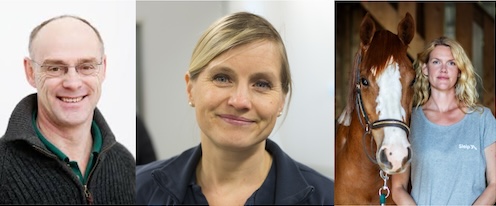
The Professor Ingvar Fredricson Foundation is proud to award its 2025 scholarship to three distinguished biomechanics researchers—Professor Lars Roepstorff, DVM, PhD; Professor Marie Rhodin, DVM, PhD, Diplomate ACVSMR, ECVSMR; and Associate Professor Elin Hernlund, DVM, PhD, Diplomate ECVSMR—whose cutting‑edge work carries forward Professor Ingvar Fredricson’s pioneering legacy.
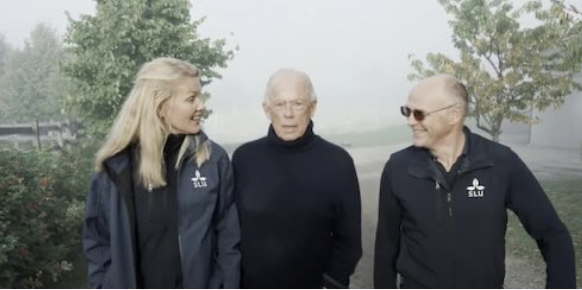
Professors Lars Roepstorff, Marie Rhodin and Dr.Elin Hernlund
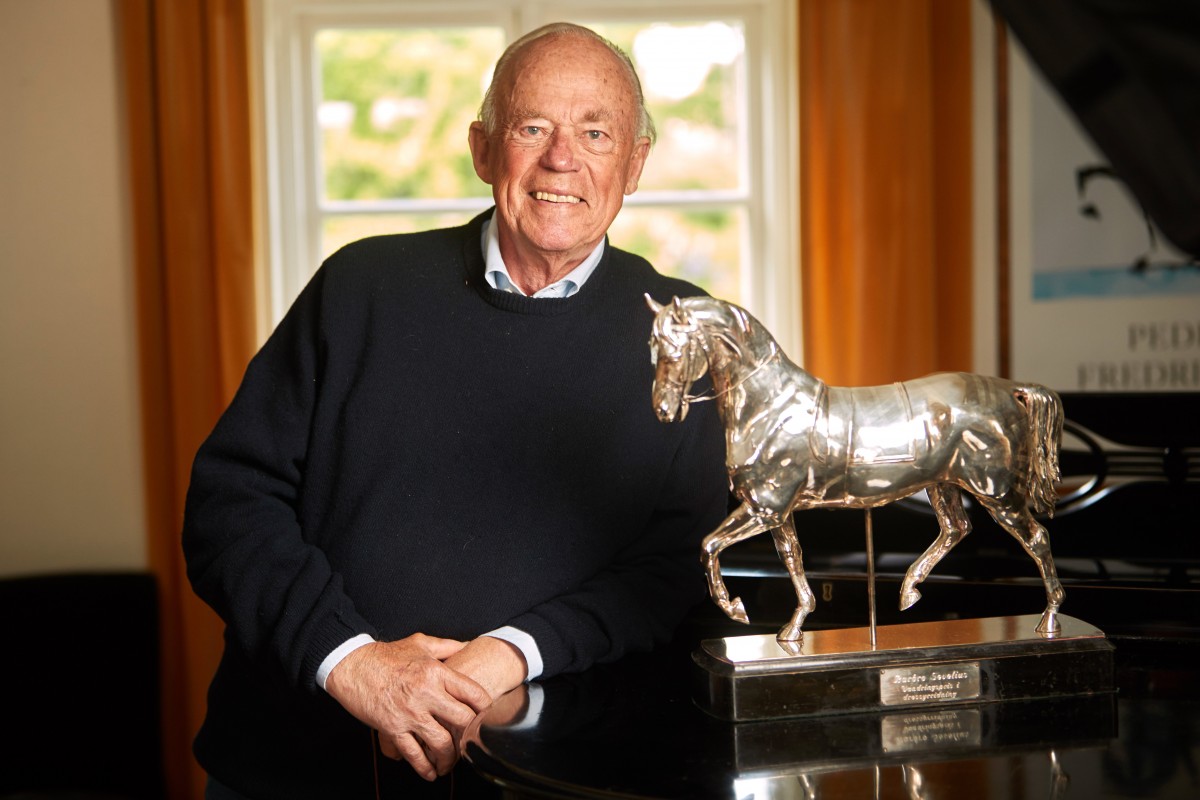
Co-founder Professor Ingvar Fredricson, DVM, PhD—The Father of Swedish Equine Biomechanics Research
Nearly fifty years ago at the Swedish University of Agricultural Sciences (SLU), Professor Ingvar Fredricson defended the groundbreaking doctoral thesis Equine Joint Kinematics and Coordination, laying the foundation for Swedish equine biomechanics research.
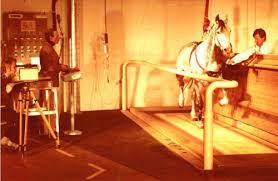
He went on to establish SLU’s first high‑speed treadmill laboratory for real‑time gait analysis.
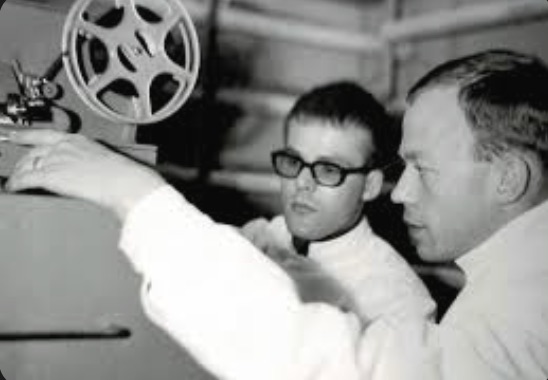
Using high‑speed cameras and photogrammetry techniques—adapted from SAAB Viggen landing‑gear testing—he reconstructed precise 3D models of hoof and joint movement and developed standardized kinematic protocols that remain central to modern lameness diagnostics.
His research on racetrack geometry and surface mechanics led to the development of banked trotting‑track curves, which redistribute load, reduce joint stress, and improve performance—an innovation that became a global standard.
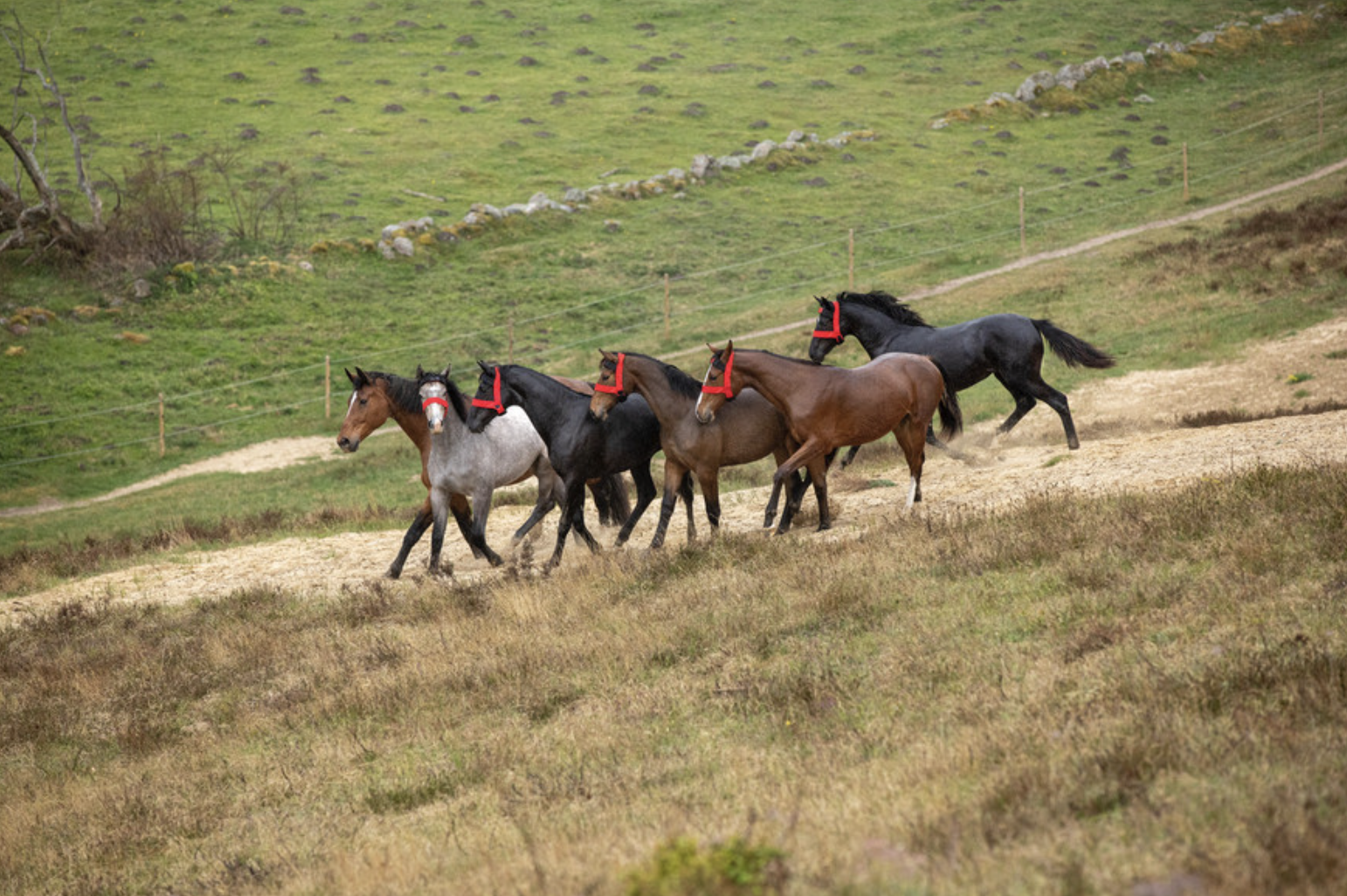
Through the Brösarp Project, he demonstrated that foals raised on varied terrain develop thicker articular cartilage, correlating with improved lifelong soundness.
Professor Fredricson inspired Professors Roepstorff and Rhodin and Dr. Hernlund to envision—and pioneer—the future of equine biomechanics long before today’s advanced tools existed.
Professor Lars Roepstorff, DVM, PhD, From Hoof Simulator to Global Standards
Professor Roepstorff extended Fredricson’s arena-surface legacy by engineering the mechanical hoof simulator—an apparatus that quantifies firmness, cushioning, responsiveness, grip, and uniformity to objectively assess surfaces. As an FEI “footing expert,” he’s evaluated arena surfaces at over 50 top-level competitions, including the London 2012, Rio 2016, Tokyo 2020, and Paris 2024 Olympic Games. His current biomechanical research focuses on the dynamic interaction between horse and rider, examining how equipment such as saddles mediates force transmission, movement symmetry, and communication. He’s also working with objective diagnostic tools for equine lameness—integrating motion capture, pressure mapping, and gait analysis to detect subtle asymmetries and optimize both horse and rider well-being.
Professor Marie Rhodin, DVM, PhD, Diplomate ACVSMR, ECVSMR, Objective motion analysis to improve lameness diagnostics across species
Professor Rhodin has conducted groundbreaking research on lameness in horses and how lameness diagnostics can be improved using objective motion analysis. The knowledge generated is now used worldwide when motion analyses are performed on horses during lameness investigations and when veterinarians interpret the results. She also conducts research on how to interpret horses’ and cows’ body language and facial expressions to detect lameness and pain. As a dedicated supervisor and mentor, she’s nurturing the next generation of equine researchers.
Dr Elin Hernlund, DVM, PhD, AI-Driven Gait Analysis
Dr. Hernlund advances objective gait analysis and integrates AI tools into everyday equine care—enabling earlier lameness detection and prevention. As co-founder and CMO of Sleip, she led the development of a marker-free, lab-grade AI smartphone app to track over 100 anatomical keypoints—now used in over 40 countries. She co-created PFERD, one of the world’s most comprehensive databases for equine motion patterns, paving the way for next-generation biomechanical research and innovation. She also spearheaded the DESSIE 3D-motion model at KTH/SLU, bridging AI and veterinary science to give horses a “digital voice” and drive more precise interventions.
A Shared Vision for the Future
By awarding this scholarship to Roepstorff, Rhodin, and Hernlund, the Professor Fredricson Foundation keeps Fredricson’s bold vision alive—driving biomechanical breakthroughs that improve horse welfare and performance worldwide. The Foundation is proud to support the next generation of equine biomechanics leaders and to spotlight their pioneering efforts to advance horse welfare.
Celebrating Knowledge, Horsemanship and Welfare at Flyinge
At Flyinge’s Horse Welfare Summit, the Professor Ingvar Fredricson Foundation awarded its 2026 scholarship to Dr Andrew McLean, recognising his pioneering work in equitation science and his longstanding contribution to equine welfare.
Dr Andrew McLean to Receive the Professor Ingvar Fredricson Foundation Scholarship at the 2026 Horse Welfare Summit
Two days. One shared goal: advancing horse welfare through science, education and practice. Join leading international experts at the Horse Welfare Summit 2026, where Dr Andrew McLean will deliver two keynote lectures and receive the Professor Ingvar Fredricson Foundation Scholarship.
The Smartphone's Growing Role in Sport Horse Management
A new review examines how smartphones are becoming genuine tools for monitoring a horse's soundness, heart rate and recovery, and even for meeting international competition requirements. Among the systems it highlights is Sleip, co-founded by Dr. Elin Hernlund, one of the Foundation's own scholarship recipients, whose work builds on decades of Swedish equine biomechanics research going back to Professor Ingvar Fredricson himself.
2025 Scholarship Awarded to Three World-Leading Biomechanics Researchers
On November 2, visitors gathered in Hall B at the Jönköping Horse Show for the Professor Ingvar Fredricson Foundation’s 2025 scholarship ceremony, celebrating groundbreaking Swedish research in equine biomechanics. From the pioneering efforts of the 1970s—when high‑speed cameras and manual measurements were the researcher’s tools—to today’s AI‑powered motion analysis and robotic hoof simulators, the audience was taken on a journey through decades of innovation. Professors Lars Roepstorff and Marie Rhodin, together with Associate Professor Elin Hernlund, shared their latest breakthroughs, followed by live demonstrations showing how AI and high‑precision sensors are transforming the understanding of horse–rider interaction. Moderator Jens Fredricson guided the dialogue and inspired exchange between researchers, while post‑event discussions with attendees helped build valuable bridges between research and practice.


%20copy.png)
