A Swedish startup is using printed sensor technology to measure, in real time, how equipment affects the horse, giving trainers and riders concrete data to guide welfare based decisions.
The equestrian world is entering a new phase of knowledge based development. With printed sensor technology, the Swedish startup OfHorse is creating tools that allow researchers, trainers, and riders to understand the interaction between horse and human in real time, without affecting how the horse moves.
Depending on the project, sensors can be built into equipment, prototypes, or dedicated research setups, capturing data on force, pressure, strain, movement, acceleration, timing, contact, and interaction.
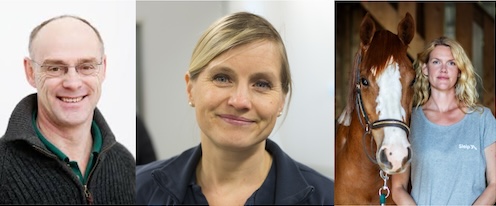
One of the co founders is Professor Lars Roepstorff, 2025 co-recipient of the Professor Fredricson Foundation scholarship. His long-standing expertise in equine biomechanics and surface quality has been central to the project's development and scientific foundation.
OfHorse also collaborates with Bhoof, founded by Peder Fredricson, an Olympic rider with several medals and a team world champion. Together, they work to develop equipment that is anatomically correct, supports natural movement, and provides measurable insights into how pressure and forces change when the horse is in motion.
In a recent test, OfHorse fitted sensors to a girth and breastplate to measure tension and pressure as the horse stood, moved, and jumped, giving Bhoof concrete data on how each product loads the horse rather than relying on feel alone. Where pressure under a girth is easy enough to check by hand while the horse stands still, it is far harder to know how that pressure shifts once the horse is moving or jumping. Measurements like these let equipment be assessed on how it actually behaves in motion, not just how it fits at rest, and give trainers and riders a clearer basis for improving comfort and preventing unnecessary restriction.
This kind of documentation also has a broader value: it strengthens the equestrian sport's Social License to Operate, the trust the sport must earn and maintain, by making welfare based decisions more transparent and evidence based.



%20copy.png)