A landmark international study has identified the five areas most essential to sport horse health and welfare — and calls for a unified, evidence-based charter to close the gap between tradition and science in equestrian sport.
A research team from nine countries set out to answer a pressing question: what does it actually take to ensure the welfare of horses competing at the highest levels of sport? Their answer, published in the journal Animals in 2023, is both clear and urgent.
Using a Delphi study — a structured method for building consensus among experts — the team consulted 104 international and national equestrian specialists across four rounds of deliberation. The result is the first consensus report of its kind: an internationally agreed framework identifying the domains most essential to sport horse management.
Five areas emerged as essential: training management, competition management, young horse management, health and veterinary management, and the horse-human relationship. Stable and environmental management were rated important but not essential, as experts felt these were already generally well handled.
The findings reveal a field at a crossroads. Many management decisions across equestrian sport remain rooted in tradition and individual experience rather than scientific evidence. This, combined with growing public scrutiny of disciplines like dressage, showjumping, and eventing, has created a pressing need for credible, evidence-informed guidelines.
Perhaps the study's most thought-provoking finding was a paradox among the experts themselves: welfare was widely valued in principle, yet not consistently rated as a core management domain in practice. The authors suggest this reflects how poorly understood welfare still is as a concept — complex, multifactorial, and too often confused with health alone.
The study team's central recommendation is the development of a sport horse welfare charter: a shared set of evidence-based guidelines that national and international federations can use to support their members, improve education, and demonstrate to the public that horse welfare is genuinely prioritized.
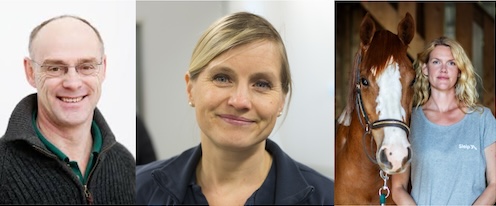
Notably, the study team includes Lars Roepstorff, Professor at the Swedish University of Agricultural Sciences — and a recipient of the 2025 Professor Ingvar Fredricson Foundation scholarship. His involvement is a reminder of how interconnected this work is with the research the foundation exists to champion.



%20copy.png)