Paris 2024: When Horse Welfare Became a Political Issue
October 10, 2024
The French parliament took an unusual step ahead of the Paris 2024 Olympics, submitting 46 horse welfare recommendations to the international organising committee — a clear sign that equine wellbeing is now engaging audiences far beyond the traditional equestrian world.
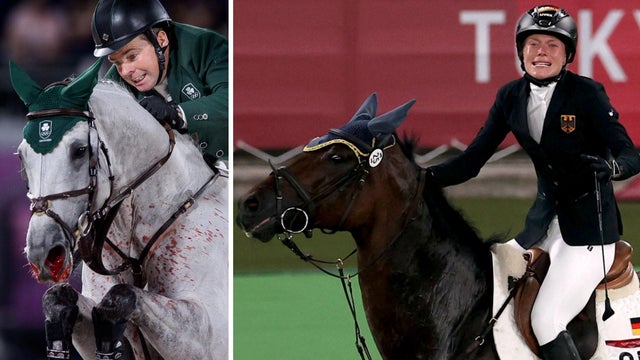
The Tokyo 2020 Olympics left a mark on equestrian sport that went far beyond the arena. Three incidents — the euthanasia of the eventing horse Jet Set after a cross-country fall, the striking of the pentathlon horse Saint Boy by his rider and trainer, and show jumper Kilkenny completing a blood-stained course without elimination — sparked an international outcry. Social media erupted, petitions circulated, and calls grew louder for equestrian disciplines to be removed from the Olympic Games altogether.
The incidents at the Tokyo 2020 Olympics brought equine welfare into the global spotlight
France took notice. Nine months after Tokyo, a study group from the French National Assembly — the lower house of the French Parliament — published a landmark 72-page report addressed directly to the Paris 2024 Olympic organising committee, bypassing the FEI entirely. The message was clear: Paris 2024 must be the Olympic Games of equine welfare.
The report's 46 recommendations cover every aspect of a competition horse's experience. Tack and equipment come under close scrutiny — from the tightening of nosebands and the use of gag bits, to the banning of draw reins and hind tendon boots used as a form of mechanical doping. Veterinary controls are addressed in detail, including mandatory vaccination protocols, stricter anti-doping measures, and the immediate stopping of any performance at the first sign of blood. The report calls for a dedicated, independent Welfare Committee with free access to the entire Olympic equestrian precinct around the clock.
The report calls for a comprehensive review of bits, nosebands, and other equipment used in competition
Competition formats are also challenged. The report argues that the three-rider team format introduced at Tokyo — where every score counts and no drop score is allowed — places unjust pressure on riders to finish courses regardless of their horse's condition. It recommends a return to four-rider teams with a drop score, a format that better protects horses and riders alike.
Perhaps the most significant section addresses dressage and the ongoing practice of hyperflexion — the forced positioning of the horse's nose behind the vertical. Despite being banned under FEI regulations, the practice persists at the highest levels of the sport. The report calls for enforceable sanctions and cites a decade of scientific evidence on its harmful effects, including restricted breathing, increased stress, and long-term physical damage.
The French National Assembly's 72-page report on equine welfare at the Paris 2024 Olympic Games — one of the most comprehensive political interventions in the history of equestrian sport.
The report concludes with a vision: an Equine Welfare scoring system applied across all Olympic equestrian events, making welfare performance visible to the public and accountable to independent experts. In a country where horse riding is the fourth most popular sport and the horse is among the most beloved animals, France was sending a message — to the IOC, to the FEI, and to the equestrian world — that the relationship between sport and the horse must be built on respect, transparency, and science. The full 72-page report in English is available via the link below.
Celebrating Knowledge, Horsemanship and Welfare at Flyinge
At Flyinge’s Horse Welfare Summit, the Professor Ingvar Fredricson Foundation awarded its 2026 scholarship to Dr Andrew McLean, recognising his pioneering work in equitation science and his longstanding contribution to equine welfare.
Dr Andrew McLean to Receive the Professor Ingvar Fredricson Foundation Scholarship at the 2026 Horse Welfare Summit
Two days. One shared goal: advancing horse welfare through science, education and practice. Join leading international experts at the Horse Welfare Summit 2026, where Dr Andrew McLean will deliver two keynote lectures and receive the Professor Ingvar Fredricson Foundation Scholarship.
The Smartphone's Growing Role in Sport Horse Management
A new review examines how smartphones are becoming genuine tools for monitoring a horse's soundness, heart rate and recovery, and even for meeting international competition requirements. Among the systems it highlights is Sleip, co-founded by Dr. Elin Hernlund, one of the Foundation's own scholarship recipients, whose work builds on decades of Swedish equine biomechanics research going back to Professor Ingvar Fredricson himself.
2025 Scholarship Awarded to Three World-Leading Biomechanics Researchers
On November 2, visitors gathered in Hall B at the Jönköping Horse Show for the Professor Ingvar Fredricson Foundation’s 2025 scholarship ceremony, celebrating groundbreaking Swedish research in equine biomechanics. From the pioneering efforts of the 1970s—when high‑speed cameras and manual measurements were the researcher’s tools—to today’s AI‑powered motion analysis and robotic hoof simulators, the audience was taken on a journey through decades of innovation. Professors Lars Roepstorff and Marie Rhodin, together with Associate Professor Elin Hernlund, shared their latest breakthroughs, followed by live demonstrations showing how AI and high‑precision sensors are transforming the understanding of horse–rider interaction. Moderator Jens Fredricson guided the dialogue and inspired exchange between researchers, while post‑event discussions with attendees helped build valuable bridges between research and practice.





%20copy.png)